
Cut plastic from your bathroom routine
The bathroom is an area where most people can significantly cut back their environmental impact. The vast array of disposable plastic packaging on sale in the average supermarket or pharmacy bathroom aisle is staggering. Luckily however, there are many very easy swaps you can make, which I go through here.
Shampoo, conditioner & body wash
One of the easiest swaps is getting rid of the large bottles of liquid soap that you may use in the shower as body wash, shampoo and hair conditioner for mostly packaging-free solid bars of the same. By far the largest ingredient in any liquid shampoo etc. is water, so by cutting that out in the solid bars, you’re also reducing the energy required to transport your cleaning products. Plenty of options available:
Lush shampoo bars and Lush conditioner bars High street retailer Lush has some very nice options, although pricier than elsewhere.
Supermarket options include bars recently started being sold in Sainsbury’s.
Amazon has plenty of choices. This is the one I use personally and would recommend, although I should note I have short hair so can’t comment on effectiveness on long hair.
Shampoo of course does a fine job as body wash so no need to buy that as a separate product, but of course there are plenty of bath soaps in bar form available.
Dental care
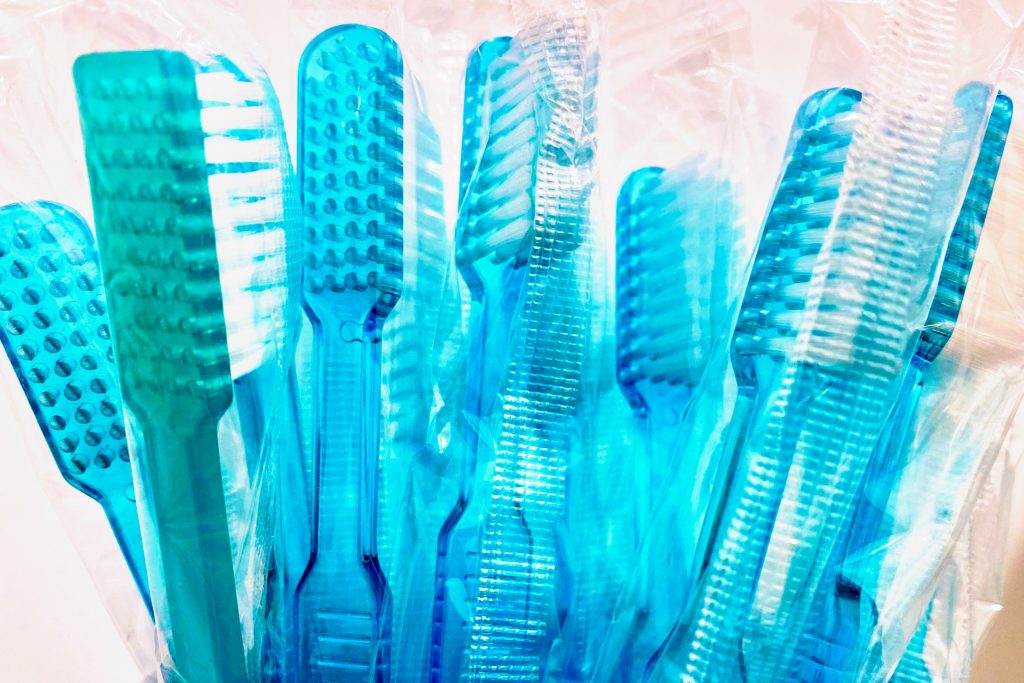
I prefer a manual toothbrush to electric, but I hate throwing away the whole brush each time, so I found a manual toothbrush with replaceable heads, by German manufacturer Yaweco, available at Amazon for instance. I can definitely recommend these.
The heads of those are still plastic, however you can recycle these by taking them to a TerraCycle toothbrush recycling point in a scheme paid for by Colgate.
If you’d rather not use any plastic at all, there are lots of bamboo options available, but I’ve personally not found one I can stand to use due to how it feels. Your experience will differ though!
Instead of plastic floss in a plastic container, switch to either a silk or cornstarch refill options in a glass bottle, such as that made by Georganics and sold in various online stores. I would caution that this definitely isn’t as good as the plastic-based stuff – it doesn’t glide as smoothly between your teeth and breaks much more easily. But I prefer being able to put it into the compost / food waste bin so it’s worth that drop in quality for me.
For toothpaste, the plastic-free option is tablets you chew to create a lather for brushing with. I use these made by ecoliving. They take a bit of getting used to as they’re nowhere near as frothy as the toothpaste you’re used to, but they do the job and contain fluoride.
Moisturiser
It’s not easy to find packaging-free moisturiser, but after searching for a long time I found this moisturiser bar by Zero Waste Path, which comes in several scents. It’s a heavier moisturiser than I used previously (by Bulldog) but I’m fine with it and worth it for the zero plastic (just a small cardboard box).
There other options that do use plastic packaging, but have return schemes for the packaging that means it gets re-used. This includes Lush moisturisers: they have a scheme you can return pots to the store for money off your next purchase that day.
I mentioned Bulldog moisturisers a moment ago, they have a scheme where you can post back their product tubes via First Mile, where they get melted down and used again to make new packaging. While this is good on the plastic front, it’s still a waste of energy compared to reusing or not having packaging in the first place.
Deodorant
The most common types of deodorant are aerosols and roll-ons, both of which are generally in single use plastic, metal or glass packaging. Solid sticks are the next most common, but these too are often in single use plastic packaging.
The main option I’ve found with less packaging is deodorant in the form of powder, and few options of a solid bar. A few options exist here such as Lush (again).
However one option that’s even easier is simply using bicarbonate of soda. You can try this with some from the cooking cupboard – mix with water to form a solution/suspension, and apply with finger tips. I find it works incredibly well, although be careful to just a tiny bit at first and adjust the dosage from there, as it can be a bit sore if you apply too much. If you find you get on well with this, you can buy bicarb in 5kg sacks so you never run out, and use very little packaging per usage.
Razors
Razors these days for men and women are complicated things with several blades, often disposable and made mostly of plastic. Cartridge razors where you only replace the head are of course a better option for reducing waste.
The best option though is the old fashioned “safety razor”, such as a classic by Wilkinson Sword. The entire thing is metal, so it should last a lifetime, or can be totally recycled if not. Then you buy fully-metal razor blades to slot into it. Collect these when no longer satisfied with their cutting power and take to a scrap metal recycling facility (not your own recycling bin).
Another option is the “alum” block, a stone made of similar chemicals to that mined and used in anti-perspirant. I’ve not used this myself, but others I’ve spoken to say it’s good. Sold in various places, such as Ethical Superstore.
Soap
Nothing revolutionary to say here, but for the soap on your basin – using a bar of soap is the most packaging-free option. If you must have liquid soap, order a 5L container off the internet and refill your pump, should last a long time with a lot less plastic per millilitre as it’s such a large container.
Toilet paper
This isn’t so much on reducing plastic as not too much is involved with toilet paper, but there’s really no need for toilet paper to be made from virgin (brand new) paperstock, so it is about reducing waste. Look out for toilet paper made from recycled products in your supermarket, or buy a brand like Who Gives A Crap? who also use their profits for socially-responsible causes.
Photo by Bekky Bekks on Unsplash